
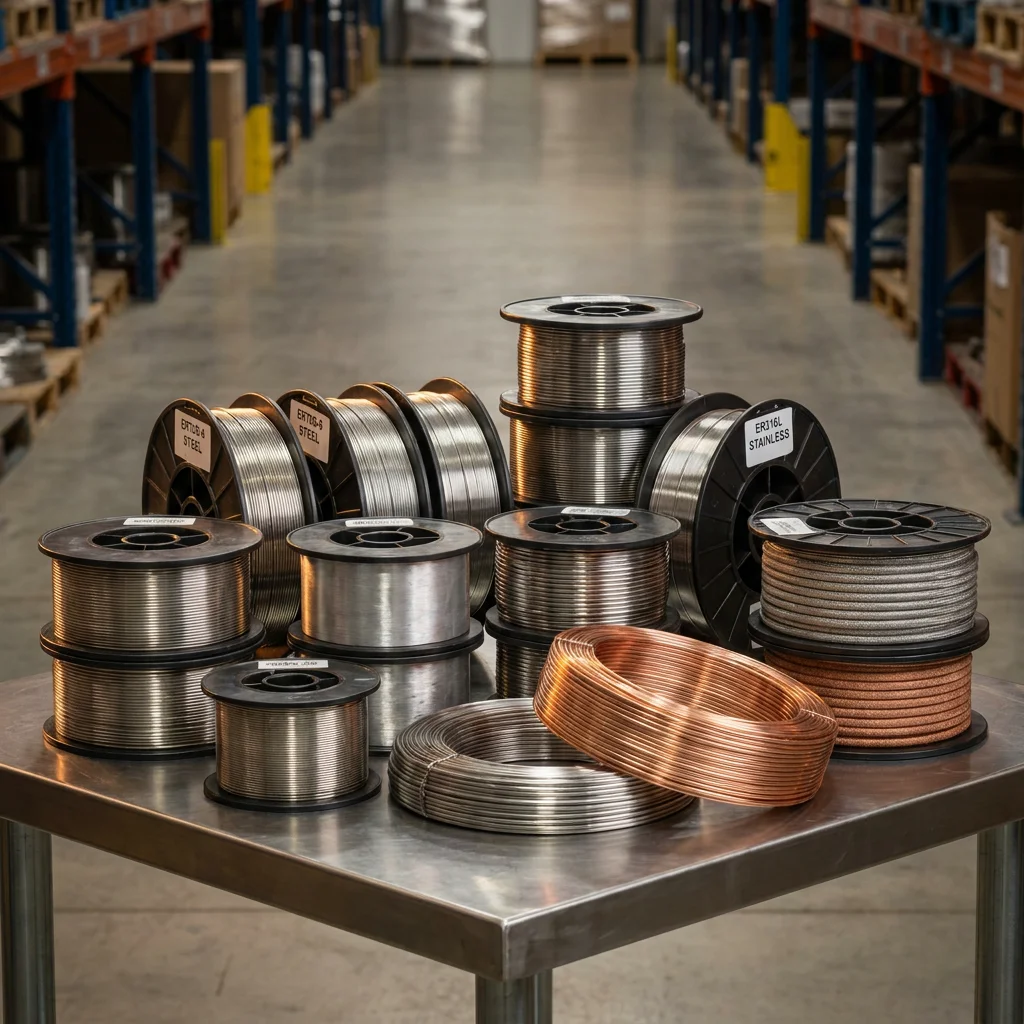
Advanced Welding and Thermal Spray Wire s 2026: A Comprehensive Technical Guide to Nickel, Aluminum, Stainless Steel, and Copper Alloys
Published Date: May 14, 2026
As we navigate through 2026, the global industrial sector continues to demand higher performance, greater durability, and superior precision from welding and thermal spray materials. The evolution of manufacturing technologies in the aerospace, petrochemical, marine, and energy sectors has placed a significant emphasis on the quality of filler metals. High-performance alloys, particularly those based on Nickel, Aluminum, Stainless Steel, and Copper, are at the forefront of this industrial revolution. At DZX Factory, we specialize in providing these critical materials, ensuring that every weld and every coating meets the most stringent international standards.
This technical guide delves deep into the properties, applications, and selection criteria for the most essential welding and spray wires in 2026. Whether you are performing high-pressure pipe welding or applying protective coatings to turbine components, understanding the metallurgical nuances of these alloys is vital for success.
1. Nickel-Based Welding Wires: The Guardians of Corrosive Environments
Nickel-based alloys remain the preferred choice for environments where extreme heat and aggressive corrosion are the norms. In 2026, alloys such as ERNiCrMo-3 (Inconel 625) and ERNiCr-3 (Inconel 82) are more critical than ever.
ERNiCrMo-3 (Nickel 625): This alloy is renowned for its high strength and excellent aqueous corrosion resistance. The combination of nickel, chromium, and molybdenum, along with niobium, provides a solid-solution strengthening effect that maintains mechanical properties from cryogenic temperatures up to 1800°F (982°C). In the petrochemical industry, ERNiCrMo-3 is widely used for cladding and welding of flare stacks, piping systems, and pressure vessels.
ERNiCr-3 (Nickel 82): Often used for joining dissimilar metals, ERNiCr-3 provides excellent resistance to oxidation and stress-corrosion cracking. It is a staple in the power generation industry, particularly for welding the heat-affected zones in nuclear reactors and high-temperature boiler tubes.
| Alloy Grade | Ni Content (%) | Cr Content (%) | Mo Content (%) | Primary Application |
|---|---|---|---|---|
| ERNiCrMo-3 | Min. 58.0 | 20.0 - 23.0 | 8.0 - 10.0 | Offshore/Chemical processing |
| ERNiCr-3 | Min. 67.0 | 18.0 - 22.0 | N/A | Dissimilar metal welding |
2. Aluminum Alloy Welding Wires: Meeting the Demand for Lightweighting
The push for energy efficiency in 2026 has led to a surge in the use of aluminum alloys, particularly in the automotive and transportation sectors. Aluminum welding wires like ER4043 and ER5356 are the workhorses of this movement.
ER4043 (AlSi5): This silicon-based aluminum wire is known for its excellent fluidity and resistance to weld cracking. It is primarily used for welding 6xxx series alloys. The silicon addition lowers the melting point, making it easier to control the weld pool, resulting in a cleaner finish with minimal spatter.
ER5356 (AlMg5): For applications requiring higher strength and better corrosion resistance in marine environments, ER5356 is the preferred choice. As a magnesium-based alloy, it provides superior ductility and toughness. In 2026, it is extensively used in the construction of high-speed ferries, aluminum trailers, and structural components for the renewable energy sector.
3. Stainless Steel Filler Metals: Precision and Hygiene
Stainless steel welding remains vital for industries where hygiene and longevity are paramount, such as food processing, pharmaceuticals, and medical devices. The "L" series (Low Carbon) continues to be the industry standard in 2026.
ER308L : Specifically designed for welding Type 304 and 304L stainless steels, ER308L features a maximum carbon content of 0.03%. This minimizes the risk of intergranular carbide precipitation, ensuring that the weld joint maintains its corrosion resistance even in demanding environments.
ER316L: The addition of molybdenum in ER316L provides enhanced resistance to pitting and crevice corrosion, particularly in chloride-containing environments. This makes it the go-to wire for chemical tankers, desalination plants, and marine infrastructure in 2026.
4. Copper and Bronze Welding Alloys: Conductive and Aesthetic Solutions
Copper and its alloys are essential for their high thermal and electrical conductivity. In 2026, the growth of the electric vehicle (EV) market and green energy infrastructure has increased the demand for precision copper welding wires.
Silicon Bronze (ERCuSi-A): This alloy is widely used for GMAW (MIG) welding of copper, brass, and bronze. It is also an excellent choice for brazing steel, providing a high-strength joint with minimal thermal distortion. In the artistic and architectural sectors, silicon bronze is favored for its aesthetic appeal and corrosion resistance.
Aluminum Bronze (ERCuAl-A1): Known for its exceptional wear and corrosion resistance, aluminum bronze is frequently used for surfacing and reclaiming worn parts in marine and industrial machinery. Its high resistance to saltwater corrosion makes it indispensable for ship propellers and pump components.
5. Thermal Spray Wires: Surface Engineering for the Future
Thermal spraying has evolved significantly by 2026, allowing for the application of high-performance coatings that extend the life of critical components. Thermal spray wires are used to create barriers against wear, heat, and corrosion.
Nickel-Chrome Spray Wires (NiCr 80/20): These wires are used to produce dense, oxidation-resistant coatings for high-temperature applications like furnace parts and jet engine components. The coatings provide an excellent bond and maintain their integrity even under thermal cycling.
Zinc and Aluminum Spray Wires: Often used for large-scale corrosion protection of steel structures (bridges, pipelines, and offshore platforms), these wires provide cathodic protection, significantly extending the service life of the infrastructure.
6. Comparative Performance Analysis: Selecting the Right Wire
In 2026, selecting the right welding or spray wire requires a careful balance of mechanical properties, environmental resistance, and cost-effectiveness. The following table provides a high-level comparison to aid in the selection process.
| Property | Nickel Alloys | Aluminum Alloys | Stainless Steel | Copper Alloys |
|---|---|---|---|---|
| Corrosion Resistance | Extreme (Acid/Heat) | High (Atmospheric) | High (General/Food) | High (Marine/Chemical) |
| Tensile Strength | Very High | Moderate | High | Moderate to High |
| Common Usage | Oil & Gas, Aerospace | Automotive, Marine | Medical, Food Processing | Electrical, Marine |
| Weldability | Complex (Requires Care) | Good (with Cleaning) | Excellent | Good (High Heat Input) |
7. Quality Assurance and Precision Manufacturing at DZX Factory
At DZX Factory, we recognize that the integrity of a structure is only as good as the filler metal used to join it. Our 2026 manufacturing process incorporates the latest in vacuum melting and precision drawing technologies. Each batch of welding and thermal spray wire undergoes rigorous testing, including spectral analysis for chemical composition and mechanical testing for tensile strength and elongation.
Our commitment to sustainability also drives our production. By optimizing our energy consumption and implementing advanced recycling programs for scrap metal, we ensure that our high-performance alloys are produced with a minimal environmental footprint.
Conclusion: The Future of Industrial Joining and Coating
The year 2026 represents a pivotal moment in industrial history, where the choice of materials defines the limits of human engineering. High-purity Nickel, Aluminum, Stainless Steel, and Copper welding wires are more than just consumables; they are the literal bonds that hold our modern world together. By selecting the appropriate filler metal and ensuring the highest standards of quality, manufacturers can achieve unparalleled reliability and performance.
For those seeking technical consultation or high-quality welding and spray materials, it is essential to partner with a supplier that understands the complexities of 2026 metallurgy. Focusing on innovation, quality, and technical excellence will ensure that your industrial projects stand the test of time.
General Inquiry: For more information regarding our full range of welding and thermal spray alloys, please contact our technical sales team for comprehensive catalogs and material data sheets. We provide tailored solutions to meet the specific requirements of your industrial applications.