Welcome to Jiangsu DZX Factory.

Email:dlx@dlx-alloy.com Mobile/Whatsapp:+86 199 0611 9641
Professional manufacturer of welding wires and spraying wires,over 22 years.
Welcome to Jiangsu DZX Factory.
Email:dlx@dlx-alloy.com Mobile/Whatsapp:+86 199 0611 9641
Professional manufacturer of welding wires and spraying wires,over 22 years.
Contact:Jason
Whatsapp:+8619906119641
Email:dlx@dlx-alloy.com
Add:NO.32 West Taihu Road, Xinbei District, Changzhou, Jiangsu,China
Release time:2026-05-25 click here:771
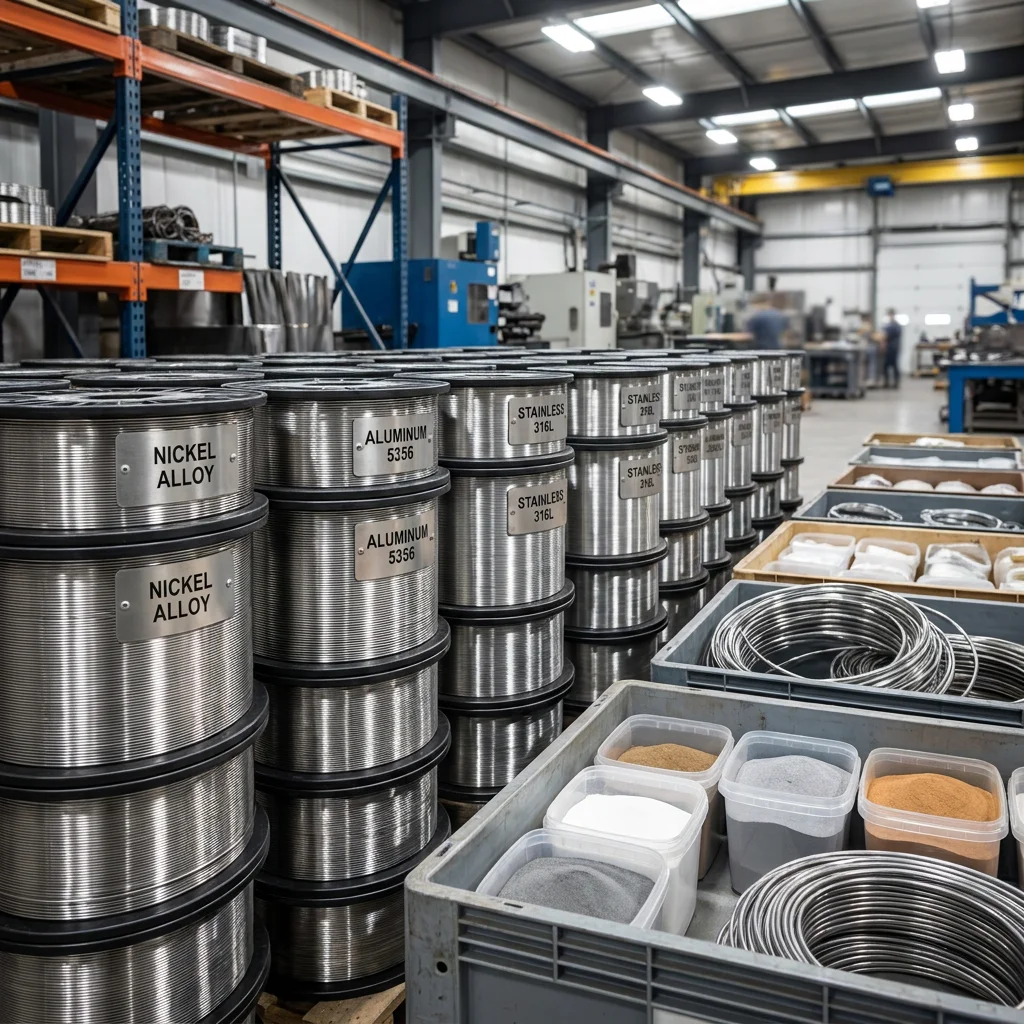
In the rapidly evolving industrial landscape of May 2026, the integrity of structural joins and the longevity of surface coatings have become paramount. Industrial welding wires and thermal spray materials are no longer seen as simple consumables but as engineered components that define the safety, performance, and durability of high-stakes projects. From the lightweight aluminum structures of modern electric vehicles (EVs) to the corrosion-resistant nickel-alloy piping in chemical processing plants, the choice of filler metal and coating material determines the success of the application. This technical guide explores the primary categories of welding wires—Nickel, Aluminum, Stainless Steel, and Copper—alongside specialized spray wires, providing a roadmap for B2B procurement and engineering teams in 2026.
As we navigate through 2026, the welding industry is dominated by automation, precision, and a push for high-performance alloys. Modern Robotic MIG/MAG and TIG systems require filler wires with exceptional surface cleanliness, consistent diameter tolerances, and stable metallurgical properties to ensure defect-free welds. Similarly, thermal spray technology has advanced, allowing for the application of high-density, low-porosity coatings that provide superior wear and corrosion resistance compared to traditional methods.
The manufacturing process for these wires has also evolved. Advanced drawing and shaving technologies ensure that the wires are free from surface lubricants and oxides, which are the primary causes of porosity and weld failures in high-precision industries like aerospace and medical device manufacturing. Furthermore, the integration of real-time monitoring in welding systems has increased the need for wires with highly consistent electrical conductivity and feeding characteristics.
Nickel alloys are the go-to materials for the most extreme environments in 2026, including chemical processing plants, desalination facilities, and subsea oil and gas extraction. Nickel-based filler metals are prized for their ability to maintain strength and corrosion resistance at both cryogenic and elevated temperatures.
Commonly referred to as Inconel 625 welding wire, ERNiCrMo-3 is utilized for its high strength and outstanding resistance to pitting and crevice corrosion. It is particularly effective in joining Inconel 625, Incoloy 825, and various molybdenum-containing stainless steels. Its ability to maintain integrity under high-pressure, high-temperature (HPHT) conditions makes it indispensable for 2026's deep-water energy infrastructure.
Pure nickel welding wires are primarily used for joining and cladding wrought and cast nickel alloys to themselves or to carbon steel. In 2026, ERNi-1 is heavily used in the production of caustic evaporators and chemical storage tanks due to its unmatched resistance to alkalis, particularly sodium hydroxide.
This nickel-copper wire is used for welding Monel alloys to themselves and for cladding steel. It provides excellent resistance to corrosion by seawater and hydrofluoric acid. In 2026, it remains a staple for marine engineering and oil refinery alkylation units.
The global shift toward electrification in the automotive sector has made aluminum welding wires more critical than ever in 2026. Aluminum's high strength-to-weight ratio is vital for extending the range of EVs and improving the efficiency of high-speed rail and aerospace structures.
As one of the oldest and most widely used aluminum welding alloys, ER4043 contains silicon, which improves fluidity and reduces the risk of solidification cracking. In 2026, it is the standard for welding 6xxx series aluminum alloys used in automotive frames and bicycle components.
ER5356 is an aluminum-magnesium alloy wire known for its higher shear strength and better corrosion resistance in marine environments compared to ER4043. It is the preferred choice for shipbuilding, offshore platforms, and heavy-duty structural applications where weld strength and saltwater resistance are the primary concerns.
| Wire Grade | Base Material | Key Property | Primary Application in 2026 |
|---|---|---|---|
| ERNiCrMo-3 | Nickel | High corrosion/pitting resistance | Chemical & Subsea Oil/Gas |
| ERNi-1 | Nickel | Excellent alkali resistance | Caustic processing equipment |
| ER4043 | Aluminum | High fluidity, low crack risk | Automotive & General structural |
| ER5356 | Aluminum | High strength, marine resistance | Shipbuilding & Marine structures |
Stainless steel remains a cornerstone of the global manufacturing economy in 2026, particularly in the food, pharmaceutical, and architectural sectors. Copper wires provide specialized solutions for joining dissimilar metals and high-conductivity applications.
These low-carbon stainless steel wires are used for welding 304 and 316 series stainless steels. The low carbon content prevents intergranular corrosion in the heat-affected zone. In 2026, the "Si" versions (e.g., ER316LSi) are often preferred for robotic welding because the increased silicon improves arc stability and bead appearance.
Commonly used for MIG brazing, silicon bronze allows for the joining of galvanized steel and dissimilar metals without destroying the zinc coating. In 2026, it is a key material in automotive repair and architectural metalwork.
Thermal spraying is a key technology in 2026 for extending the service life of industrial components by applying a wire-form coating through electric arc or flame spray processes. This allows for wear resistance and corrosion protection on inexpensive base metals.
This is a standard "bond coat" material. It reacts exothermically during spraying, creating a very strong mechanical and metallurgical bond with the substrate. In 2026, it is essential for aircraft engine part repair and high-temperature oxidation protection.
Used primarily for long-term corrosion protection of steel structures like bridges and wind turbine towers. In 2026, thermal-sprayed zinc coatings are often preferred over traditional galvanizing for large-scale infrastructure due to their on-site applicability and superior longevity.
| Spray Material | Composition | Feature | Best Use Case in 2026 |
|---|---|---|---|
| NiAl 95/5 | 95% Ni, 5% Al | Exothermic bond strength | Jet engine component repair |
| Pure Zinc | 99.9% Zn | Galvanic protection | Infrastructure & Wind energy |
| SS 420 | Martensitic SS | Hardness and wear resistance | Hydraulic rams and shafts |
To achieve structural integrity in 2026, procurement teams must consider several critical factors:
Surface Finish and Cleanliness: The wire must be free from drawing lubricants or atmospheric contaminants to prevent porosity in the weld.
Shielding Gas Compatibility: The choice of shielding gas (Argon, Helium, CO2 blends) significantly affects the arc stability and weld penetration.
Storage and Handling: Aluminum and high-purity nickel wires are sensitive to moisture and should be stored in climate-controlled environments.
Certifications and Traceability: In 2026, every spool must be traceable to the heat of the melt with full Mill Test Reports (MTRs) provided.
Q1: Why should I choose ER316LSi over ER316L?
A: The higher silicon content in the "Si" grade increases the fluidity of the weld pool, leading to a smoother bead surface and better tie-in at the toes of the weld, which is highly valued in 2026's robotic welding systems.
Q2: Can I weld 6061 aluminum with ER5356?
A: Yes, ER5356 is the standard choice for welding 6061 aluminum when strength is the priority. However, if the component will be anodized later, ER5356 may show a color difference compared to the base metal.
Q3: What is the main benefit of NiAl 95/5 in thermal spraying?
A: Its exothermic reaction creates a "self-bonding" effect, allowing for high bond strength even on substrates that haven't been pre-heated, making it safer and more efficient for field repairs in 2026.
Q4: How does 2026 manufacturing ensure the quality of welding wires?
A: At DZ X Factory, all welding and spray wires undergo continuous non-destructive testing and spectroscopic analysis to ensure that every batch matches the exact chemical composition required for high-stakes industrial projects.
The success of industrial projects in 2026 hinges on the reliability of the materials used. Whether you are welding high-pressure piping for a chemical plant or applying wear-resistant coatings to mining equipment, the quality of your wire is the foundation of your success. DZX Factory is committed to delivering premium welding and spray wires that meet and exceed international standards. Our expertise in nickel, aluminum, and stainless steel metallurgy ensures that your team has the technical support and material consistency needed for the challenges of tomorrow.
For more information on our range of welding and spray wires, technical datasheets, or to receive a quotation for your 2026 project, please contact us. Let us help you achieve technical excellence in joining and coating.
Contact us via the website inquiry form for a professional consultation and quotation.
Publication Date: May 25, 2026
Author: DZX Factory Technical Support Team