Welcome to Jiangsu DZX Factory.

Email:dlx@dlx-alloy.com Mobile/Whatsapp:+86 199 0611 9641
Professional manufacturer of welding wires and spraying wires,over 22 years.
Welcome to Jiangsu DZX Factory.
Email:dlx@dlx-alloy.com Mobile/Whatsapp:+86 199 0611 9641
Professional manufacturer of welding wires and spraying wires,over 22 years.
Contact:Jason
Whatsapp:+8619906119641
Email:dlx@dlx-alloy.com
Add:NO.32 West Taihu Road, Xinbei District, Changzhou, Jiangsu,China
Release time:2026-03-24 click here:1287
Nickel-Based Welding Wire Porosity: Causes, Prevention & Industrial Solutions
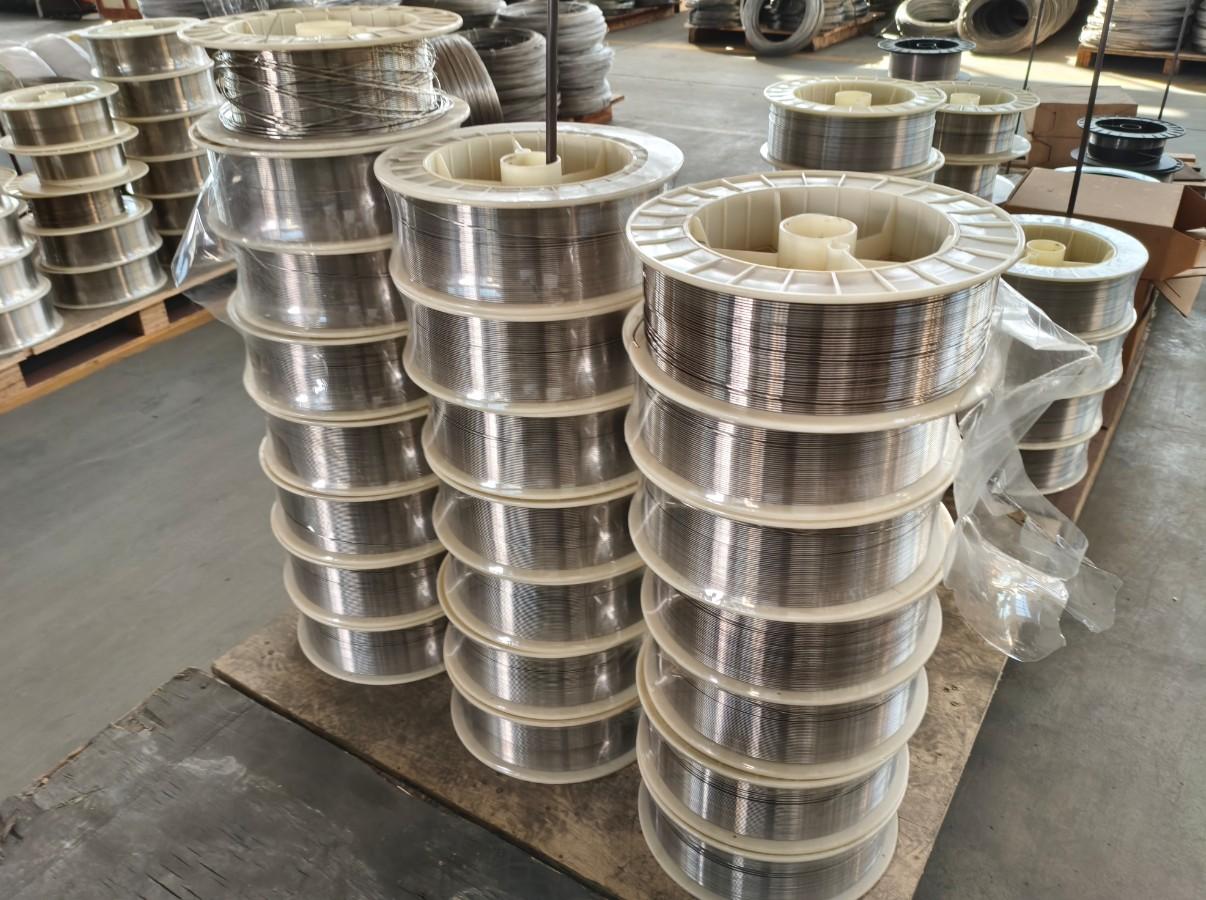
Nickel-based welding wires are widely used in demanding industrial environments such as aerospace, power generation, petrochemical processing, and marine engineering. Alloys such as ERNiCrMo-3 (Inconel 625) and ERNiCr-3 ( Inconel 600 ) are known for their excellent corrosion resistance, high-temperature strength, and durability.
However, one of the most common quality issues encountered during welding is porosity. This defect not only affects the appearance of the weld but can significantly reduce mechanical strength and corrosion resistance.
At DLX Alloy, we support global clients in solving welding challenges by providing stable-quality nickel alloy welding wires and technical guidance. This article explores the root causes of porosity, effective solutions, and industry best practices.
Porosity refers to the presence of small gas pockets or voids trapped within the weld metal during solidification.
Small round holes on the weld surface
Internal voids (detected by X-ray or ultrasonic testing)
Reduced weld density
Impact:
Lower mechanical strength
Reduced fatigue resistance
Increased risk of corrosion
Nickel alloy welding wires commonly used include:
| Grade | Equivalent | Application |
|---|---|---|
| ERNiCr-3 | Inconel 600 | High temp oxidation resistance |
| ERNiCrMo-3 | Inconel 625 | Corrosion resistance |
| ERNiCrMo-4 | Hastelloy C276 | Strong chemical resistance |
| ERNiCrFe-2 | Inconel 718 | High strength |
Porosity is usually caused by gas entrapment during welding. The sources of gas can be categorized as follows:
Oil
Rust
Moisture
Paint
These contaminants decompose under heat and release gases.
Nickel Welding Wire s are sensitive to moisture:
Improper storage
High humidity environments
Leads to hydrogen porosity.
Insufficient gas flow
Gas turbulence
Contaminated gas
Air enters weld pool → oxygen & nitrogen → porosity
Too high current
Too fast welding speed
Improper arc length
Causes unstable molten pool
Poor-quality wire may have:
Oxide layer
Surface contamination
Releases gas during melting
Wind
Outdoor welding
Temperature fluctuations
Before welding:
Remove oil, rust, oxide
Use grinding or chemical cleaning
Store in dry conditions
Use sealed packaging
Avoid long exposure
Recommended:
Pure Argon or Ar+He mix
Stable flow rate
Maintain stable arc
Avoid excessive heat input
Control welding speed
This is the most critical factor.
DLX Alloy ensures:
Clean surface finish
Strict chemical composition
Low impurity content
Preheating reduces moisture
Post-weld heat treatment improves structure
| Property | Nickel Alloy | Stainless Steel |
|---|---|---|
| Porosity Sensitivity | High | Medium |
| Corrosion Resistance | Excellent | Good |
| Cost | Higher | Lower |
| Welding Difficulty | Higher | Easier |
Pipelines
Offshore platforms
Turbines
Boilers
Reactors
Heat exchangers
Aerospace & energy sectors demand zero-defect welding
Robotic welding increases consistency
Demand for Inconel 625, 718 increasing
DLX Alloy provides:
Stable chemical composition
Global export experience
Custom welding wire solutions
Strict quality inspection
Porosity in nickel-based welding wire is a complex issue influenced by material quality, environment, and welding process.
By controlling these factors and selecting reliable suppliers, manufacturers can significantly improve weld quality and reduce defects.
DLX Alloy is committed to helping global customers achieve stable and high-performance welding results.